Tuesday, 20 January 2009

on good things (where good is both worth having, and worth doing.)


Vintage Polaroid film boxes
Originally uploaded by missha

(1.) work, and how it gets that way*
Each day, a new tiny tragedy occurs at work to remind us of the presence of the wolves at the door. When I returned to work from holidays, five desks were suddenly empty. This, of course, was not one of the smaller losses: all good, likeable people, working neither harder nor any less hard than any of the rest of us; people with new mortgages to pay or elderly parents or a broken shower or a dyslexic’s panic about having to rework a CV. This was their loss, and our loss, and each of us shed a skin of confidence. This is real. Oh.

The smaller disappointments creep in quietly, like a new season: a constant shortage of coffee, cheap biscuits, the omission of any talk of the new year bonuses it was posited we’d receive just a couple of months ago, a tension in peoples’ faces when you arrive late or leave on time.

I don’t know when the look began. The look on a project manager or account director’s face when you question the brief, ask a question that’s likely to make the client uncomfortable, wonder aloud whether that’s the best way to do something, or if it’s worth doing at all. It’s the look that says, ‘Please. Just do this. And then we can all get paid.’

But the client isn’t always right, and sometimes we do them a disservice by creating something useless or clunky or half-arsed or ill thought-out. Not asking questions or rocking the boat oftentimes means creating something that’s just not very good. Which means it won’t achieve its aims. Which means it’s a waste of money, a waste of time – and it lays waste to everyone’s enthusiasm for actually making something worth having. In short: wasteful.

People aren’t buying; maybe it makes sense to stop selling them things, for a bit, at least. Maybe this is evolution at work: a chance to strip out all the stuff that isn’t working and change tack – create things that have inherent value, actually add value to peoples’ lives. Things that are simply nice to have, to play with, to cherish.

Maybe that’s the worst of these mundane tragedies: watching that small death each morning as a person switches on their machine and that tiny light turns on, while their own tiny light flicks off.

(2.) computer love
Rach was happy this morning; chirruping about how she’d enjoyed a moment of perfect clarity where she realised that she loved her job. And then immediately began worrying whether that meant anything; whether it mattered when the beautiful things she makes online can’t be touched or held or hung on a wall or folded up and tucked into a wallet.

Which made me wonder: why is it hard to love anything made of pixels and blips with the same force of passion we save for lovely new books or a snuggly scarf or a piece of art? Is it because an essential part of loving something is the potential to own it or have it for ourselves, or the exquisite knowledge that someone could (even though it won't be you)?

(3.) an impossible rescue mission
One of the marvellous things about creating something people really love is that they will help it to survive without you, if need be. Kind of like godchildren – their built-in lovability gives them an insurance policy if some awful fate befalls their parents.

Which seems to be the case with Polaroid. It’s just so damn lovable and weird and idiosyncratic that people refuse to let it die what looked like an inevitable death. But in swoop IMPOSSIBLE, plucking it from the rusty jaws of obsolescence. (Fingers firmly crossed, yes indeed.)

(4.) *henry miller has the last word
“Develop an interest in life as you see it; the people, things, literature, music - the world is so rich, simply throbbing with rich treasures, beautiful souls and interesting people. Forget yourself.”

Thursday, 8 January 2009

lovings and thankings


for paul elliman's sweet alphabet.

for sheer playfulness, jamie johnson's short film, 'holiday around my bedroom'.

for david foster wallace, again. and for this precise and generous assessment of his unique gifts.

for striped bendy straws, miso soup in mugs, andrew bird, pavements crispy with frozen muddy footprints.

for being happy. for being home in my bed. for being home in my skin. for feeling the perfectly curved lightness of hope in my cupped palms.

now: to dunk chocolate biscuits in tea and watch the streetlights come on.

Friday, 5 December 2008

bowie + mercury

every friday me and danceface rach take it in turns to choose a song, email it to the other, and then we listen at the same time in our offices across london, as loud as our ears can take it.

i can't believe how incredible this week's edition was. i'd forgotten how much this song can stop me in my tracks when i really, really listen. but now i remember.


Can't we give ourselves one more chance?
Why can't we give love that one more chance?
Why can't we give love, give love, give love, give love, give love, give love, give love, give love?
'Cos love's such an old fashioned word
And love dares you to care for the people on the edge of the night
And love dares you to change our way of caring about ourselves
This is our last dance...


wow.

Wednesday, 12 November 2008

tab, you're it!


Tabs that are open on my computer right this very second:

Alan Yentob’s Imagine – last night’s ‘Let there be light’ episode – on BBC iPlayer

hungryman’s inside-outing ‘Timesculpture’ ad for Toshiba

Gerald Cooper’s amazing talk about bees

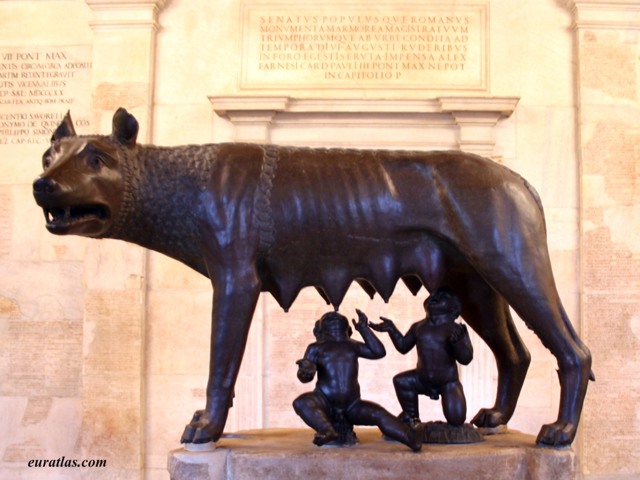
Image search results for ‘Capitoline Wolf’

Karim Benzema’s Wikipedia entry

An overview of a previous episode of Imagine profiling Doris Lessing

Malcolm Gladwell’s look at the social life of paper

Tuesday, 11 November 2008

the art of happiness


I’ve been a bit obsessed by the question of how to be happy for a long time. So much of our happiness is down to our personal quirks, the vagaries of our days, whether the guy in the cafĂ© butters your bagel while it’s hot out of the toaster so it goes all deliciously melty, or waits for it to go cold and then thickly slathers cold grease over it. But it seems that the structures for improving happiness might actually be fairly quantifiable.

To some extent, a one-size-fits-all approach is still pretty effective. Physical activity is proven to improve emotional wellbeing, for example. So is feeling engaged within a community, be it colleagues, family, or fellow members of the Justin Vernon Appreciation Society.

But listening to Martin Seligman’s talk on TED last night, it got me thinking about how much of happiness is also knowing who we are, and skewing our lives in the directions we’re more or less built to go in. He talks about the Pleasurable Life, the Good Life, and the Meaningful Life, and though I’m totally mangling this, each of us is hardwired with certain skills to derive more happiness from one of these ways of living more than any other.

It made me realise I maybe just don’t know myself very well. Which is interesting, really…hi, nice to meet me! I sat down to take Seligman’s Signature Strengths questionnaire and the process of working out my answers was as interesting as the results. I think it’s cheating, but I had to enlist my housemate, Badam’s, help with some of them. Would friends say I can be arrogant? Um, Badam?

So 240 questions, 2 glasses of wine and the realisation that I am utterly unambitious later, I get to find out what my signature strengths are and it’s pretty much a longwinded way of saying surprise! YOU’RE A LIBRAN.

Thursday, 6 November 2008

when you sit right down in the middle of yourself you better have a comfortable chair

I'm terrified of getting old. I never thought I was. My thinking that was more to do with thinking that either (a) age just wasn't going to get its bony fingers around my taut young limbs, oh no, (b) it was so far away as to be laughable, or (c) if I did have to get older, I'd just do it better, more supple-ly, more decadently, more elegantly, more eccentrically than anyone else.

Yeah.

Having been told by a doctor that my stiff, painful knee was the result of a medical condition known as AGEING, and happening across the cruelest magnifying mirror on the planet and therefore meeting my crow's feet for real for the first time, it would appear that, oh shit, I'm not special. Not only will I really, truly have to get older, but it's already happening. Uh-oh.

So I'm taking lessons.

From the majestic Ms Maya Angelou (talking first about how proud she is to see a black man in the whitest of houses, but fro about 6:30, reciting 'Still I Rise' in that honeyed bass of hers that gives me goosebumps):


From the irrepressible hip cat that is Mr Oscar Brown Jr:


And from the inimitable Ed Rondthaler, the best looking, most electric 102 year old I've EVER seen.

Wednesday, 5 November 2008

and all of a sudden, hope


...so the United States has a new President. I can’t explain how excited I am, or even necessarily why. He’s black, and I’m effervescent with happiness about the most visible political force in the world having a black face, given the proportion of the world – and of US citizens – who see black faces in the mirror every single morning and yet have had to wait this long to see it reflected back to them from the political looking glass. He stood staunchly for women’s reproductive rights, and has a wife who isn’t going to be anyone’s shadow. That bodes well. He knows our oil days are and must be numbered, and is willing to be bold in finding solutions.

These could all be reasons I might have cast my vote for him, had I the chance.

But the main reason is just that he made it an election about hope. And enough people tilted their heads and listened and were lit up by his dogged hope to start a glow that’s gathered enough luminescence to banish the darkness of the past 8 years.

I could only ever vote for hope.

So now I want to know, how long will my homeland wait for its own black Prime Minister? Because as buoying as today’s world news is, a sad voice inside me thinks that may not be something I’ll ever live to see happen in Australia. People who weren’t bought and sold but enslaved anyway, people who cared for the land and all its inhabitants far better than its immigrants ever have.

But today’s all about the hope. I’m keeping my own small candle lit.